Saturday, May 3, 2025

Keep On Running - The Grant Smith & The Power Story


Toronto of the 1960s was a hotbed of musical activity. Patrons hungry for musical entertainment could have their pick of genre on any given night: jazz, country, folk (solo and with a group), pop/rock, and more. It all came down to what club you chose to walk into. Perhaps the greatest delight of this musical buffet was the proliferation of a distinct form of R&B/Soul, mostly on Yonge Street in the early days. Clubs like the Devil’s Den, Club 888, the Hawk’s Nest, Club Mimicombo, The Gogue Inn, and especially The Bluenote, were instrumental in the growth and promotion of this new sound.

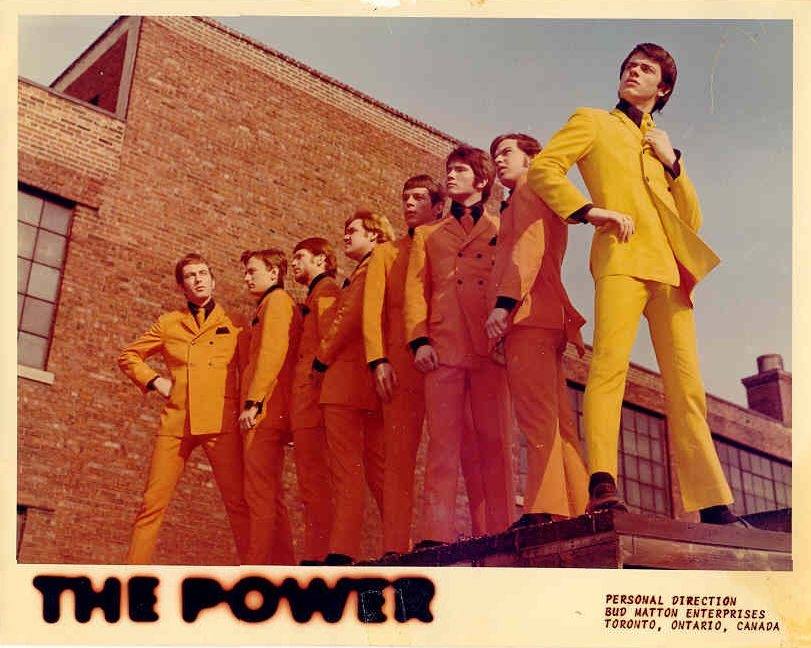
Grant Smith & The Power were one of the cornerstones of Toronto's new thriving R&B scene. The band was a training ground (much like Ronnie Hawkins' band) for up-and-coming local musicians. Members of "The Power" went on to be in Motherlode, McKenna Mendelson Mainline, Jericho, and Dr. Music, among other prolific Canadian bands. Along with The Mandala, David Clayton Thomas' bands, Bobby Kris & The Imperials, Jon and Lee & The Checkmates, Robbie Lane & The Disciples, and more, Grant Smith & The Power were instrumental in developing what later became known as "The Toronto Sound."

Grant Smith & The Power began under a (slightly) different name, backing a different singer. The group met and officially formed at Yorkville’s Chez Monique Coffeehouse (88 Yorkville Ave.) during October 1966. The original lineup consisted of ex-members of two seminal Yorkville R&B bands, as well as members of Las Vegas show band “The Beau Keys.” Drummer Charlie Miller and organist Val Stevens played with “The Weepers,” tenor saxophonist Jerry (Shymanski) Mann played with “Bobby Kris and The Imperials,” and trumpeter Ralph Miller (Charlie’s older brother) played with “The Beau Keys.”

Further auditions added budding local bassist Mike Harrison and Hamilton guitarist Les Morris to the lineup. Les had been playing for some time and was quite proficient in the 1950s tradition. Mike, on the other hand, was relatively new to his instrument. In the background, Brian Ayres (Bud Matton agent and former bassist with The Galaxies, The Marque-Royals and lastly, The Beau Keys) was ever-present as the band's “Éminence grise.” He and Ralph Miller were the band’s de facto management.

Last (but certainly not least) was singer Eddie Spencer. Eddie was part of the initial wave of musical immigration from Jamaica to Toronto. He had a distinct, powerful voice and was determined to make his mark on the Canadian music scene. Eddie made the trip to Canada in 1964 alongside his bandmates in The Sheiks. The group was looking to build a following and score some gigs outside of their homeland. Some of these Jamaican natives had no idea what the Canadian winters had in store. Lead singer Jackie Opel made a quick exit after his first taste of the “Canuck Cold.” This was one of many opportunities for the budding young talent of Eddie Spencer. He replaced Jackie for a year or two before leaving the group altogether.

Eddie Spencer & The Power garnered a small local following in the lead-up to 1967. In Toronto’s R&B scene, they were setting themselves apart as a group to watch out for. Eddie’s raw, soulful delivery and the consummate musical ability of “The Power” helped them really make an impact. Their public debut was at Toronto’s “Club 888” in late October 1966, opening for the inimitable Ike & Tina Turner.

Over the next two months, Murray Campbell's Devil's Den club became “The Power's” rehearsal hall and after-hours spot. Long and frequent rehearsals helped propel the band up in status to one of Toronto's most popular dance bands, playing all the hippest local venues: The Gogue Inn, The Hawk's Nest, The Broom and Stone, and almost every forward-looking high school gymnasium in what we know today as the G.T.A. (Greater Toronto Area).

Though things were off to a great start for the band, a problem was looming on the horizon. Ralph Miller had been acting as the de facto manager of “The Power” with guidance from Brian Ayres, a friend and cohort of the band. Brian had begun working as a junior agent at Toronto’s “Bud Matton Agency.” A growing dissatisfaction with vocalist Eddie Spencer was blooming between Brian and Ralph (potentially influenced by the higher-ups at The Bud Matton Agency). Eddie was more of an accomplished vocalist than a flashy showman; it seems the latter was what the pair was after. Additionally, due to the racial climate in Toronto at the time and attitudes around race, the band’s leadership felt that having a white singer would be a better business move, particularly when it came to attracting the younger female demographic. This was around the time when Grant Smith came to the attention of the group.

Ellis Grant Smith was born and raised in London, Ontario. A lover of soul and R&B, Grant often sang along to his favorite records, but his early days in music were as a drummer, not as a singer. He drummed for a London comedy-rock band called “The Missing Links.” Grant stayed with the group until a car accident in 1965 ended his drumming career. He soon after picked up a microphone. He got together with a short-lived country-rock band known as Zeke & The Moonshiners.

By 1966, Grant's group Zeke & The Moonshiners had run its course. Being an early alt-country outfit, Grant was dissatisfied with the material and direction. He was plotting his exit soon after joining. Shortly after leaving, Grant formed E.G. Smith and The Express. This group played music that Grant loved, and so he gave his all every time they got on stage. His raw, albeit untrained, voice was instrumental in helping build the popularity of the group. They quickly gained a live reputation around Ontario for their "heart-stopping" talent and live energy.

As 1966 came to a close, E.G. Smith & The Express had reached newfound levels of popularity and began gigging in Toronto.  Brian Ayers was managing the group via the Bud Matton agency and convinced the rest of  "The Power” to go see the band perform. Though the group didn’t think much of it, the suits had other ideas. Grant, though not half the singer as Eddie, was a flashy showman with a particularly powerful stage presence; this particularly caught Brian Ayres’ eye.


On the evening of December 31st, 1966, having just completed the New Year's Eve gig upstairs at Toronto's prestigious Gogue Inn, singer Eddie Spencer and guitarist Les Morris were fired. Neither musician had any inkling beforehand, nor did the rest of the band; this really took everyone by surprise. After the news was broken, frontman Eddie Spencer approached bassist Mike Harrison: "Hey, man, Happy New Year! I've just been fired." Shocked by the news, he uttered a stunned "Huh?" Mike was in absolute disbelief.

Eddie was fired for previously mentioned reasons, while Les was fired to accommodate Grant Smith's guitarist Jim Pauley. Additionally, Jerry Mann [Shymanski] quit around this time as the band leadership didn't want him to bring his girlfriend to gigs (he was supposed to be available to the teenyboppers), and as the oldest band member (23), he wouldn't stand for it. Brian Ayres was brought in to replace him on saxophone.

After his unexpected firing from “The Power,” Eddie worked on putting together another band. In late 1967 he started gigging with a new band as Eddie Spencer and the Mission. They eventually caught the attention of ARC Records’ Tony DiMaria, who became Eddie’s personal manager. What followed was a fruitful year/two of recording, releasing three singles in a twelve-month span alone. First out of the gate was “You're So Good To Me Baby/If This Is Love (I'd Rather Be Lonely)” in April 1968. This features a variation of The Precision’s “If This Is Love (I'd Rather Be Lonely)” with the same backing track. This had minor success before being forgotten. ARC’s newly founded subsidiary label Goodgroove housed his next two singles, “Power Of Love/Baby Now That I've Found You” in December of 1968 and “Dream Lover/Whiter Shade Of Pale” in early 1969. These three singles have become highly coveted in the intervening decades (particularly in the UK, where they’ve been discovered and reissued), showing the high caliber of soul/funk/R&B that Eddie was capable of singing as well as, in the case of “Power of Love,” his ability as a songwriter.

As for "The Power," changes began taking place almost immediately. They hired Grant Smith and guitarist Jim Pauley, but another bandmate of Grant’s from “Express” was also being courted. Drummer Wayne Stone took more convincing, but after two weeks, he relented. This decision created a fairly unique situation for a dance band: two drummers. The next, crucial change was the band name. They rebranded as Grant Smith & The Power, sometimes going by E.G. Smith & The Power before fully committing to the former.

During early 1967, the band started establishing a solid fan base on southern Ontario’s dance circuit. "The Power" were fully rehearsed and began showcasing tight, eye-catching choreography at their shows. In addition to this, management had a series of suits made for the band's members in an array of eye-catching colors. Famous Toronto celebrity tailor Lou Myles was contracted and did not disappoint; Grant Smith & The Power were one of the sharpest-dressed bands in town. 

Audiences were amazed by what "The Power" had cooked up in just two short months with their new lineup. Many wondered why the group had yet to record. The truth was, there had been little interest from local/international labels up until this point, which wasn't entirely the band's fault. Very few independent Canadian labels were around during that period; international labels hadn't started their "Canadian Expansion" projects, and the established Canadian labels were more concerned with reissuing popular international releases. 

During March 1967, however, "The Power" managed to secure a demo recording, potentially spearheaded by Brian Ayres. They recorded some of their standard R&B stage tunes as well as an early version of "Keep On Running.” Though nothing initially came of it (besides the studio experience), getting Keep On Running down on tape was an important decision. 

As 1967 wore on, the band was working regularly around Ontario but with an increasing frequency in Toronto. They played everywhere and anywhere they could, including eight bookings at Ronnie Hawkins' famed Hawk's Nest club alone. Unfortunately, road fatigue would claim its first victim during the summer of that year. Shortly after a June 27th show at the Broom & Stone in Scarborough, original drummer Charlie Miller left the band. With the lineup reduced to a single drummer, Wayne Stone cut his teeth in the solo drummer chair at a week-long summer resort gig in Grand Bend, Ontario. After this short engagement, the band was packed and ready for Boston.

The new lineup consisted of Grant Smith (vocals), Mike Harrison (bass), Wayne Stone (drums), Ralph Miller (trumpet), Brian Ayres (tenor saxophone), Jim Pauley (guitar), and Val Stevens (organ/keyboards). The band booked gigs in the Northeastern United States for semi-regular work throughout the remainder of the summer. Four weeks in Boston kicked off the tour, followed by two weeks in Revere, Massachusetts, and wrapped up with a two-week stay in Williamsville, a suburb of Buffalo, New York.

Grant Smith & The Power returned to Toronto at the end of August. Many members were rejuvenated and hopeful for the future. Unfortunately, guitarist Jim Pauley didn’t feel the same way. He decided to quit the group, frustrated with the lack of meaningful success. This prompted bassist Mike Harrison to briefly quit the band as well. He was burnt out from touring and felt like staying around Toronto while considering his next move.

After many auditions, guitarist Jim Pauley was replaced by the talented Jon Palma, who formerly played in "The Weepers" with Charlie Miller and Val Stevens. Band management persuaded Mike Harrison to return to the band as well. "Though I was initially frustrated, I decided it was in my best interest to return to the band," says Mike Harrison. "The Power" brought Jim up to speed on their repertoire and began playing live the following week, kicked off by a gig at Toronto’s Hawk’s Nest.

During September, the band made plans to record songs with Toronto producer John C. Irvine for a potential single. They recorded a Grant Smith/Val Stevens original in “Her Own Life,” and when engineer Ivan Bradley asked what they were recording for the flip side, the band froze; nobody had considered a second tune. After some discussion, bassist Mike Harrison suggested "Keep On Running," as it had gone remarkably well in their March recording session. Everyone agreed, and they re-recorded the song for the single. 

The September recording sessions were a success, and the band was happy with the demos they had done. October was mostly dedicated to gigging and shopping around the potential single to local labels. During November, however, Grant Smith & The Power were introduced to the songwriting team Art Snider and Al Rain. The pair had been working together for most of the 1960s, writing and recording minor hits for local artists. Art Snider doubled as engineer and producer at his self-owned Sound Canada Recording Centre, while Al Rain was particularly gifted in the songwriting department, being Canada’s chief purveyor of “Northern Soul.” 

Al Rain wrote a pair of songs specifically for Grant Smith & The Power, which he presented to them on meeting. The songs required strong backing vocals, so Al Rain provided his vocal group, The Tiaras. The result was a fantastic soul/funk double-sider that has since become a collector's item among fans of Northern Soul.

Both the September and November recording sessions featured the tenor saxophone playing of Steve Kennedy. Though hired for these sessions specifically, Kennedy (of Eric Mercury & The Soul Searchers) eventually joined the band in February 1968, while they were in Boston. Brian Ayres (the band’s tenor saxophonist) switched to baritone sax for the aforementioned sessions. 

January of 1968 finally saw the release of Grant Smith & The Power's debut single, "Keep On Running/Her Own Life." John C. Irvine launched his own label called Boo! Records, and "Keep On Running" was the first release. Originally, as the story goes, they planned on “Her Own Life” being the A-side. However, “Keep On Running” turned out well, so the band decided to lead with it instead. This proved to be a stroke of genius; the song was a minor hit in Canada, reaching #15 on the CHUM charts in Toronto, with some lesser placements across the country.

Seeing the success of "Keep On Running," the band booked another small tour of the eastern U.S. for February-March of 1968, trying to capitalize and expand their audience. Behind the scenes, Brian Ayres had been chatting with an old friend, guitarist Ken Marco. The pair had played together in The Beau Keys back in 1965 before Brian joined “The Power.” Ken was looking for a gig, and Brian was more than happy to help him out. Another point in Ken’s favor was the fact that Ralph Miller had also played in a version of The Beau Keys. In Brian’s mind, Ken was a much better guitarist than Jon Palma; Ralph would second that notion, effectively sealing Jon’s fate in the coming weeks.

After discussions between Brian and Ralph, a decision was made to fire Jon Palma, replace him with Ken Marco, and pay to fly Jon back to Toronto. Though a contentious decision, nobody could dispute that Ken was the better player. Plans were made, and during an early March gig at Trude Heller’s in New York, Jon was fired and sent packing. The remainder of the U.S. dates went extremely well, considering how little time Ken had to practice. It was clear that the band made the right decision hiring Ken. They traveled back to Toronto, where multiple home gigs in and around the city awaited; most notable of these was opening for The Hollies and Spanky & Our Gang at Toronto’s O’Keefe Centre on March 17th. March was truly a fruitful month for the band. There were plans for another U.S. tour in April/May, and the band was eagerly preparing.

Early into their initial 1968 tour, at one New York gig, they struck gold. Their knockout live show, paired with the success of "Keep on Running," caught the attention of MGM A&R representative Tony Orlando. He brought them to the attention of MGM, who signed them to a deal after hearing the demos of their second single. They loved the songs and planned on releasing them on both sides of the border.

As April came to a close, "The Power's" sophomore single was readied for release. The plan was to release the single during May in Canada and August in the United States. Unfortunately, it failed to chart abroad but found minor success in Canada. Interestingly, "You Got What I Want" was the A-side in Canada, while "Thinkin' About You" was the A-side in America. In the intervening decades, “Thinkin’ About You” has been picked up by the Northern Soul circuit in the UK. Originally, there was talk of an album with MGM. This fell through after the poor performance of the band’s sophomore single.

June saw the band gigging frequently in Toronto (playing The Hawk's Nest twice) as well as touring around Ontario in promotion of their second single. The band’s third U.S. tour (this year alone) was scheduled to begin after their July 14th gig at Summer Gardens in Port Dover, Ontario. They spent three weeks in Somer’s Point, New Jersey, performing at Tony Mart’s. 

While the band began honing their material for the studio, saxophonist Steve Kennedy had been planning a line-up change. To save space and time for touring and recording situations, he wanted to bring in friend and ex-bandmate, keyboardist William “Smitty” Smith. The pair had played together in Eric Mercury & The Soul Searchers up until Steve left to join “The Power” and kept in touch. Bassist Mike Harrison and Val Stevens were fired in early October with little to no notice. As Mike Harrison puts it, “Smitty was unaware that Val and I had been fired to accommodate him. He (Smitty) told me privately that he didn't understand why Val and I were "leaving such a good thing." I didn't bother filling him in.”  

After their involuntary exit from Grant Smith & The Power, Mike Harrison and Val Stevens went their separate ways. Mike stayed in the Toronto scene for over a decade, joining McKenna Mendelson Mainline less than a week after his exit to replace unpredictable bassist Denny Gerrard. Thereafter he became a session player, working with Cathy Young, Rick James, Leigh Robinson, Ron Russell, Timothy (?), and more. Val, on the other hand, had the ambition to play more personal music. He founded a namesake jazz trio (The Val Stevens Trio), which met only limited success locally. July of 1969 saw Val return to Grant Smith & The Power, where he stayed until February 1970. After an uneventful few months bandless, Val decided to move to England in late 1970. He placed ads in Melody Maker magazine, which led to him joining the band Clown, which was short-lived due to creative differences. This was followed by Tucky Buzzard, with whom he did some gigs and wrote music for one of their songs (though uncredited when it was released on their album later). Lastly, he joined the progressive outfit Khan in early 1972 but quit the band during the summer.

Shortly after the departure of Mike and Val and the arrival of “Smitty,” the band began talks on recording an album. Near the end of October, they went into the studio to begin the process.

By early November 1968, the band had recorded their album. They again recorded at Art Snider's Sound Canada Studios. The album, simply titled Keep On Running, featured their debut single, as well as a number of covers, including Harvey Scales’ "Love-itis" (then making the rounds on the CHUM/RPM charts for scene-mates "The Mandala”), a pair of Otis Redding covers in "Respect" and "Sad Song," The Beatles "Day Tripper," Wilson Pickett's "99½," the Mar-Keys "Grab This Thing," and a 7-minute version of Bobby Gentry's "Ode To Billie Joe."

The album release saw "Keep On Running," the band’s debut hit, briefly re-enter the CHUM charts in Toronto. The group played a few gigs in and around Toronto during November and December to capitalize on the success, but trouble was on the horizon. All gigs came to a screeching halt in January with the surprise departure of guitarist Ken Marco, sax player Steve Kennedy, organist William “Smitty” Smith, and drummer Wayne Stone. The quartet were dissatisfied with the recordings and the over abundance of covers, so they relocated to London, Ontario, where they began work on a new group. They emerged five months later as Motherlode, ready to take Canada by storm. 

Staggered, Grant Smith, Ralph Miller, and Brian Ayres began searching for (essentially) a whole new band. The departed foursome were replaced by former members of a defunct Brantford, Ontario band known as Franklin Sheppard & The Good Sheppards. They were Sonnie “Jiggs” Bernardi (drums), Gord Baxter (guitar), Rick Berkett (bass), and Wulf Stelling (organ). They were supplemented by two additional horn players, Ted Stack (trumpet) and Bert Hermiston (sax/flute).

This new lineup committed to nearly non-stop rehearsals at The Hawks Nest club in Toronto over the next three months. They'd play the occasional local gig as well, but February through April was mostly dedicated to preparing for one final stab at touring in the United States, specifically Massachusetts.

May of 1969 saw the band embark on the aforementioned US tour. Things were going well through the early summer, but by July, tensions had reached a fever pitch between leader Grant Smith and organist Wulf Stelling. Wulf was fired and replaced with former organist Val Stevens for the remainder of the tour. 

The dawning of August 1969 saw Grant Smith growing restless. He desperately needed a break and convinced the band to take a hiatus for the remainder of August. This caused a few of the newer members to leave when September came around, namely Gord Baxter (guitar), Rick Berkett (bass), and Ted Stack (trumpet). Rather than replenish their ranks, Grant Smith & The Power carried on without a guitarist for the first time in their career. The lineup was now Grant Smith (vocals), Brian Ayres (saxophone), Bert Hermiston (saxophone/flute), Sonnie Bernardi (drums), Ralph Miller (trumpet), and Val Stevens (organ). 

The new roster stayed together from September 1969 to February 1970, playing regular gigs around Toronto and pockets of Ontario (Oshawa, Hamilton, etc.). Val Stevens grew tired of performing with "The Power" and decided to take a break from music for a few months before moving to England. Val was replaced by former Mandala and Power Project organist Josef Chirowski.  

                                                                                            EDITING THIS SECTION STAY TUNED


WRITTEN & RESEARCHED BY: AARON LUSCH

WITH NOTES AND INFORMATION FROM: MIKE HARRISON

CANADIANCULTCLASSICS@GMAIL.COM

Saturday, February 15, 2025

The Caribbean Question - Story Of The New Directions


    Toronto has long been a haven for immigrants of all shades and stripes. Working-class and white-collar individuals from many nations converged on the Canadian metropolis throughout the 20th century, building it into the city we know today. Surely one of the most musical of these migrations was the mass exodus from the Caribbean region to Ontario, Canada, during the 1950s, 1960s, and early 1970s. This placed Toronto and the GTA (Greater Toronto Area) at the forefront of the developing soca, reggae, and funk genres. Today we'll tell the story of one such band, The New Directions, whose stint as a backing group for Lord Shorty brought them to the precipice of soca music's debut. The story and identity of The New Directions have remained a mystery for five decades, stumping many a music historian. With a bit of luck and intuition, I recently unearthed something. 

                                   *IF ANY BAND MEMBERS SEE THIS PLEASE CONTACT ME AT: CANADIANCULTCLASSICS@GMAIL.COM*

The New Directions were formed in Toronto sometime between 1970 and 1972. Many of the members traveled to Toronto from the Caribbean during the mid-to-late 1960s, after which they got day jobs and began to play on the city's local music scene. From what I can dig up, Henry Antoine was the driving force in getting the band together. 

A drummer, percussionist, and cultural consultant, Henry was on the beat from the second his plane touched down at Toronto's Pearson International Airport in 1968. Henry devoted himself to improving the social and cultural quality of life of his fellow Caribbean immigrants in Toronto. In addition to this, Henry got involved in the early planning and performance of the Caribana Festival, quickly moving up the ranks by 1970. 

Henry participated in the first-ever calypso competition held as part of the Caribana celebrations at Maple Leaf Gardens during 1971. He was a member of the Toronto Symphony Steel Band and promoted major cultural events during the Caribana Carnival Festival at the Sheraton Center.

During 1972, Henry Antoine began working as a producer and engineer at Art Snider’s Sound Canada Recording Centre. He put together The New Directions as a backing band for his productions, with musicians he met during his various philanthropic endeavors in Little Jamaica and the Caribbean community of Toronto. The members of the band included Ralph Moore (organ/keyboards/vocals), Elton Grant (guitar/backing vocals), Glenrick Cox (drums), Henry Antoine (producer/congas/backing vocals), Michael Sheperd (bass/backing vocals), Bunny Bynoe (cowbell/tambourine), Wayne Jackson (trumpet), Oswald James (trombone), and Michael Skel [Redhead] (tenor saxophone). Ralph Moore and Henry Antoine also acted as arrangers for various sessions.

Henry Antoine met Lord Shorty during August of 1970. Due to the international popularity of Toronto's yearly Caribana event (July 31st-August 4th), Lord Shorty (real name Garfield Blackman) traveled to Toronto from Trinidad at the end of July for the "victory lap" of his National Calypso Competition win from that previous February. This was an event that took place every year at the Carnival Festival hosted in Trinidad. Though nothing transpired between Henry and Lord Shorty at the time, the pair stayed in touch, and Shorty returned to Toronto during the summer of 1972.

While in Trinidad, Lord Shorty was a respected recording artist and worked with Ed Watson and his Brass Circle band through the late 1960s, recording a half dozen singles between 1964 and 1971. Shorty performed calypso throughout his career, experimenting with adding Indian-inspired flavors to the music. 

Henry Antoine began managing Lord Shorty in Toronto and paired him with The New Directions band. They began performing live around Toronto and set to work recording the bulk of what would become Shorty's debut album." "He wanted to do this thing called soca."He said it had an infectious beat, with the rhythm to move your soul. It didn't make much sense at the time, but he was nagging at me, and he wouldn't stop until I took him to the studio," says Henry.

With no synthesizers available to the recording crew, they hired actual string players, which was a first for a calypso album at the time. The music Lord Shorty played was sharply different from the slow melodies of typical calypso music, and it came as a shock to everyone. "It didn't make sense to me because it was something new. But once we started recording, it started to sink in that what we were doing was something revolutionary."

After a brief period in Toronto, Lord Shorty's debut album "Gone Gone Gone" was released in Canada (c. 1973), bringing soca music into the world. Of the ten songs, nine were originals by Lord Shorty. Three songs were recorded back in Trinidad with Ed Watson and his Brass Circle band, but seven of the ten tracks were recorded in Toronto with The New Directions. Though the album wasn't a success in Canada, copies of the album made it back to Trinidad and other parts of the Caribbean, where fans devoured the new music. Lord Shorty asked The New Directions to tour with him, but they chose to stay in Toronto. 

The New Directions continued to perform around the greater Toronto area throughout 1973 and early 1974. Their sound was a blend of popular soul/funk/R&B covers, as well as band originals, mostly written by organist and lead vocalist Ralph Moore. Through Henry Antoine's relationship with Sound Canada owner Art Snider, The New Directions were recommended to Artie Kohn. Artie was a record store owner, band manager, photographer, and producer who decided to start Vintage Records in Toronto during 1971. With recording and manufacturing done at Art Snider's Sound Canada Recording Centre, Artie signed bands, recorded them, and sold their records (usually pressed in LP quantities of 500 and 45s of 200 to 250) in his Village Record Shop [ADDRESS UNKNOWN]. 

Artie Kohn signed The New Directions to a two-single deal and sent the band into Sound Canada to record with Henry Antoine doing double duty as producer and percussionist. The band's debut single "Trolley/I Can Understand" and sophomore single "Directions/Wildflower" were released simultaneously during the spring of 1974 and sold exclusively at Artie Kohn's Village Record Shop. No promo was done, and the singles have become quite rare in the present day. The singles represent a great cross-section between funk and soul music. The originals "Trolley" and "Directions" (A-side on each release, respectively) are instrumentals written by band organist/lead vocalist Ralph Moore. The covers "I Can Understand" and "Wildflower" (B-side on each release, respectively) are vocal tracks. Canadian music fans may note the funky rendition of Skylark's "Wildflower," then a charting hit for that band. 

Bio Written By, Audio Edited By, Photos Edited By - Aaron Lusch/Canadian Cult Classics
Original Photos/Audio Courtesy of MOCM - Museum of Canadian Music (http://Citizenfreak.com)


Wednesday, January 1, 2025

Campus Carousal - The Story Of Circle Widens


The Circle Widens band is nothing but a footnote in Canadian music history these days, often only known by serious collectors or Edmonton residents of a certain vintage. In the late 1960s, however, they were one of the top folk-rock groups in Edmonton, packing venues each and every night regardless of where they played. The Circle Widens were as beloved for their original material as they were for their covers. Their lone release (which today fetches four-figure sums on the secondhand market) is a dual-sided original and a strong example of both Canadian folk and Canadian garage rock. Here is the story of The Circle Widens. 

The Circle Widens, originally formed in Edmonton as a brother and sister folk duo, started by Susan and John Lent. They began performing during 1965 under a different (currently unknown) name. At the time of conception, Susan and John were still in high school, which limited their potential for growth. Upon beginning their post-secondary education at the University of Alberta in 1967, Susan and John began performing on campus and added their younger brother Harry to the lineup. The new trio rebranded as "The Kinfolk" and quickly garnered a reputation for their tight, high-quality performances. Unfortunately, the music tastes of the youth were changing drastically in 1968, which affected the draw of the group on campus. "There wasn't a high demand for folk groups during that time, but the university provided a fair amount of work," says Susan. In addition to their gigs at the University of Alberta, The Circle Widens regularly played at youth/community centers, high schools, coffeehouses, and Giuseppi's Pizza (8223-109 Street, Edmonton).

1968 brought about a few changes for The Circle Widens. During March, the trio added neighborhood friend Greg Vetsch (lead guitar) to the lineup, adding a new electric dimension to their formerly acoustic sound. "We were a solid electric folk-rock group," says John Lent. The new quartet gigged frequently throughout the summer, developing a small, devoted following. Greg coincidentally had a cousin named Wayne Vetsch, who played drums. They spent the better part of the summer convincing Wayne to join the band. By October, he finally gave in. Shortly afterwards, they rebranded as "The Circle Widens."

The new additions brought The Circle Widens lineup to: Susan Lent (vocals/guitar), John Lent (vocals/guitar), Harry Lent (vocals/bass), Greg Vetsch (lead guitar), and Wayne Vetsch (drums). The sound of the newly named quintet was comparable to that of fellow West Coast folkies "Three's A Crowd," with the main difference being an emphasis on covers rather than originals. They also tended toward folk-rock rather than straight-ahead folk. Susan Lent expressed her feelings on the matter in an old interview: "There are so many folk songs—but it's so much fun to do folk-rock." The band didn't want to be hampered by the old folk songbook, not to say they didn't draw from it from time to time. When deciding on a song, they chose what appealed to them. Susan says, "We don't particularly look for a message." She adds, "The boys are really fast at picking up the music." They enjoyed the challenge of adapting a song directly from the radio, learning it by ear, and putting their own spin on it.

With their line-up fully assembled, the remainder of 1968 would see The Circle Widens begin to perform more frequently, continuing to build a loyal following around Edmonton at many high schools and universities. Bob Hunka, who worked on the University of Alberta Activities Board, began helping to manage the group alongside John Lent, who previously was responsible for all managerial duties. It was through the Students' Union at U of A and Jerry Slavick that The Circle Widens was asked to perform with Harper's Bizarre. This was their biggest gig yet! "We were really excited about it. It was a real opportunity to be appearing with a professional group," says Susan. From there, the band's reputation continued to grow. They had a chance to briefly tour outside of Edmonton, appearing in Leduc, Red Deer, Saskatoon, and Blaine Lake, Saskatchewan.


The Circle Widens was busy during the final months of 1968. Between their studies and gigs around Edmonton, the group managed to record an album's worth of material. Through word of mouth, the band caught the attention of producer Joe Kozack at Edmonton's Coral Sound Studios. Joe was attempting to launch a new record label called KORLAND Records. The Circle Widens were given studio recording time at Coral Sound during November of 1968. This is where they cut the bulk of the songs, with the exception of a recording session at the University of Alberta radio studios over the Christmas holidays.

The array of 1968 recording sessions only yielded one officially released single. "See About Dreamin'/Weird Understanding" was put out on KORLAND Records during early-to-mid-1969 in limited quantities and had minor local success in Edmonton. The single is a dual-sided original with both sides having a distinct sound; the A-side (written by Harry Lent) is a moody folk-psych dirge, while the B-side (written by the whole band) is an up-tempo garage rocker. It's unknown where exactly the songs were recorded. The publishing rights for the two songs are registered with Dick Damron's "Chinook Music" (BMI), and it was manufactured in Vancouver by Imperial Record Corp. Ltd.

The Circle Widens broke up in the spring of 1970, citing a few reasons for the split. Some of the band members got out of the music business altogether after university, while others continued on. Near the end of the band's lifespan, a guitar player named Brian Logan joined, as well as a harp player named Al (last name unknown). 

Susan Lent seemingly got out of the music business after university, as did the Vetsch brothers. John Lent began to take songwriting much more seriously in 1969, and the fruits of that labor came to bear around the demise of The Circle Widens. "I performed those songs as a single folksinger in Edmonton until 1971," says John. During 1971, John was signed by Tom Northcott and Mushroom Records in Vancouver to a songwriting contract, after which point he went to Toronto and began working with Michael Baker as "Baker & Lent" for three years. Henry Lent, on the other hand, returned home and formed a new group with the remaining Lent siblings: Frank, Mike, and Tim. The Lent Brothers (as they would later bill themselves) went on to work briefly with Alberta band "Red Wyng" (Laura Vinson's backing band) during 1977, writing 3 songs for their debut album "First Flight." 

Though they were only together for four years, The Circle Widens had a quick and exciting brush with local prominence. They left behind them stories of their live shows, and their lone single release, "See About Dreamin'/Weird Understanding," has gone on to garner an international cult following in garage/psych rock collectors' circles, now fetching four-figure sums due to the scant few copies left available. "I can't believe people still have copies of that single all these years later," says John Lent. "None of the members, including myself, have a copy." Disbelief chased by a sobering sense of accomplishment; that is the feeling many musicians have when discovering an old recording of theirs has become a beloved collector's item. The Circle Widens was no different. 

Sunday, December 22, 2024

Blogspot Update - December/Christmas 2024

Hello everyone! I hope all's well and you're all enjoying your Holiday season thus far. Canadian Cult Classics HQ has been quiet as of late. Due to a rigorous on-call snow job, my time for bios has been severely limited. I'm still posting daily videos on the Youtube channel. Here's my Canadian Christmas Rarities playlist for your enjoyment. I'm working on interviews for a couple bios in the background and updates for Tony Kingston and The Magic Cycle are in the works. Stay tuned in the new year for new bios. I hope everyone has a safe and happy holiday season! 


Tuesday, December 10, 2024

Yorkville's Forgotten Poet - The Origins Of Hyde


The story of Hyde and his 1969 singer-songwriter masterwork is one of Canadian music's ongoing mysteries. For decades, the identity of this powerful poet has gone unknown to those outside of a select few. Friends and family kept his real name hidden while people who saw him perform in his pre-alias days in Yorkville seemingly forgot him altogether.

During the mid-to-late 1960s, Toronto was a highly competitive music city in multiple genres. So Hyde's fate is one experienced by many who stepped on Toronto’s smaller stages during that period. The sheer abundance of clubs and coffeehouses in the city meant that artists who couldn’t distinguish themselves against the tidal wave of similarly passionate individuals and bands would be forgotten.

Hyde’s self-titled album stands as a testament to the talent of Yorkville’s songwriters. With the exception of one Bob Dylan cover, the Hyde album is a varied batch of original songs that hints at his influences while displaying his unique talent for lyrics. Another point in its favor is the connection to Toronto psychsters Rockadrome, who provided musical backing throughout.

To collectors, the above attributes paired with an unfortunate rarity (for a Quality Records release) further drive the want and cost of this album into the stratosphere. It stands as a brick wall of rarity, ever elusive, especially in good condition. Though large, the hunt for a copy of his album pales in comparison to the hunger for information on the man behind the music. Today, the story of Hyde will finally be told.

Hyde was the eventual alias and secret project of Toronto-based singer-songwriter Brian Victor Alexander. Brian was born on March 7th, 1946, to Alice and Victor Alexander. He was raised in the west end of the city, quickly developing a love for baseball and hockey. Brian was extremely athletic, and he received the constant approval of his doting father. He attended Harwood Public School in Toronto’s west end before attending York Memorial High School.

Brian didn’t come from a musical home, but the dawning musical revolution of the mid-1960s would take residence in his mind at an early age, as it did for so many others. He developed a love of music, specifically R&B, around the age of ten. His knowledge of music grew fast, and it wasn’t long before he was the D.J. at neighborhood weekend dances.

Brian began playing guitar and harmonica around the age of fifteen. He spent countless hours enjoying the records of some of his favorite blues and R&B artists and constantly begged his parents for a guitar. They relented, and Brian began a lifelong relationship with his instrument. An “A” student and all-around intelligent boy, Brian learned fast and showed himself to have quite the way with words. He started with R&B music, but hearing Bob Dylan’s debut album in 1962 blew him away; he was an instant, lifelong fan, even considering naming his daughter Dylan. Bob was his sole inspiration thereafter to pursue folk music, learn to sing, and soon, learn how to write songs of his own. He fashioned himself after the American folk troubadour in many respects, but his songwriting grew to be wholly unique.

Newfound folk fascination aside, Brian still enjoyed listening to and dancing along to hits of the day. He was a regular teen in many regards; fascinated with pop culture, dramatic about the trivial, and, of course, enamored with the opposite sex. Sixteen-year-old Brian, at one particular dance taking place at Fairbanks dancehall (in the Fairbanks Park just south of Eglinton Avenue), met his first love. The two instantly hit it off and, with time, began dating. She was smitten by Brian’s creative side and the fact that he was then starting his musical journey. Brian was smitten by her kindness and intellect, ultimately trusting her as the sole critic of his original music and poetry.

Brian’s deep dive into folk music began in the early 1960s, first as an observer, then as a performer. He was awestruck by the amazing talent springing up in Yorkville, Toronto’s musical mecca. He began attending concerts regularly at the Riverboat coffeehouse and various other folk-oriented venues on the avenue.

A formative musical experience for Brian was seeing Bob Dylan perform at Massey Hall during late 1965, where the singer-songwriter was doing a pair of shows. This double night event took place during Bob Dylan’s highly contentious “electric” period, backed by local Toronto R&B act Levon & The Hawks (formerly Ronnie Hawkins' backing band). As with many shows along their tour, Bob Dylan was arguing with hostile fans over their dislike of his new sound. This event emboldened Brian as an artist. Paired with Brian's constant intake of top-tier folk talent in Yorkville, the Bob Dylan event inspired Brian to stand by his music, stand up for his art, and, most importantly, develop the courage to sing. He set his sights on Yorkville and, in time, became a regular performer.

During December of 1965, Brian approached the owner of the famous Mynah Bird coffeehouse, Colin Kerr, to see if he could perform there. Colin hired Brian right away, after an extremely brief audition, and booked him for the first weekend of January (7th-9th) 1966, alongside R&B band Bobby Lee & The Sceptres. The Mynah Bird had two levels and two stages; bands played on the first level, while solo acts played on the second level. “He sat on a stool on the second-floor stage, belting out his songs to an audience drinking coffee and juice drinks; dry ice filled the air while go-go girls danced in the window," says Diane. "We were young, dressed as beatniks and experiencing a new age of music and culture.”

Brian became a regular performer at the Mynah Bird coffeehouse through 1966, playing most weekends. He befriended some of the performers and patrons along the way, forming friendships and partnerships, many of which lasted over the years. A lifelong bond Brian made during this period was with bassist and singer Neil Merryweather, who was playing in Yorkville with his band Just Us (also known as The Ookpiks and The Sikusi's). Brian was known for his distinct, Dylan-esque tone and introspective original songs. He soon began performing regularly on Monday nights at the famed Riverboat coffeehouse, first as a sign-up, then as a featured performer. 

1966 was an important year for Brian's development, both musically and in his personal life. In addition to his musical trappings, he got married, and the couple had a child. This prompted Brian to get a day job in addition to his frequent live performances as a means of making ends meet. Despite their best efforts, the couple ended up separating in mid-1968. Brian moved to an apartment on Carlton Street, where he continued to work and eventually began dating again. 

Brian went through a bit of a slump, as many men/women in his situation would. He lost his wife and child and was living alone. Brian continued to perform, albeit sporadically. He soon threw himself into writing new songs and reworking old ones. By November of 1968, Brian had roughly ten songs written, including one cover. This was a dedication to his wife and child; the aptly titled “I Threw It All Away” by Bob Dylan.

With the dawn of 1969, Brian found renewed purpose in his music through a new alias: Hyde. He had a goal: to record his own songs. He continued to gig through the winter and early spring under his new Hyde alias. In June of 1969, a few months after his twenty-third birthday, Brian came to the attention of famed Toronto music mogul Art Snider. He had caught one of Brian’s shows at the Riverboat via a word-of-mouth recommendation and was so impressed that he invited him to his office the following day. Art at this time had helmed the creation of multiple record labels, with the sole goal of achieving success while promoting Canadian talent. After learning of Brian’s desire to record an album, paired with hearing a summation of his multiple original songs, Art booked him into Sound Canada Recording Studios, backed by his house group, Rockadrome.

Rockadrome was a local group of musicians assembled in the summer of 1968 by guitarists Mike Clancy (also piano and occasional drums) and Ron Dove. The pair was musically associated for most of the 1960s and played with Ronnie Hawkins’ "Hawks" before forming their own group called "The Outlaws” during 1965. The addition of drummer Rick Vallieres and bassist Paul LaChapelle was the birth of Rockadrome. Rick drummed on a 45 session for Ron Dove in 1967 while Paul was relatively new to the fold but gelled well with the guys. Rockadrome was a band for three years, releasing their own extremely rare album on Art Snider’s “Sound Canada” label in February of 1969 and an EP in 1971 (featuring Ron Dove's 1967 recordings). Art Snider kept the band busy later that year, employing them as session musicians on a couple of equally rare albums. Of course they backed Hyde, but they also backed The Allan Sisters on their debut studio album for Sound Canada.

Art Snider had faith in Brian’s songs from the start. He gave producers Ernie Lyons and Larry Malone free rein to follow the project in whatever direction it may lead. This resulted in what many consider one of Toronto’s best singer-songwriter pieces. Brian’s amazing original songs with their sparse arrangements weave a delicate, urgent musical web; this is in part thanks to the consummate musicianship of Rockadrome. Each song in this ten-song cycle creates a unique mood spun by Brian’s music and words. The only outlier is a cover of the aptly titled Bob Dylan song “I Threw It All Away.”

Thanks to his clout in the local music industry, Art Snider managed to get Brian’s album (released under the Hyde alias) a couple of spins on CHUM Radio after its release in August 1969. Through this radio promotion, Brian landed a gig promoting his new album at a secret new Toronto club known as Global Village. It was an after-hours hangout for “in the know” local musicians, many of whom had just finished sets at various Yorkville or Yonge Street clubs. The club was known as The Global Village Theatre to some, and during the 1970s, it would put on plays, including Spring Thaw (featuring Norm Amadio and Salome Bey). Primarily, though, Global Village was a secret hangout and jam spot for some of Toronto’s best and brightest talent. Early frequenters included Bruce Cockburn, Neil Young (on his brief returns to the city), and McKenna Mendelson Mainline. The venue was an important link between the incubated culture of Yorkville, which was slowly coming to an end, and the soon-to-reign Queen St. West scene of the late 1970s.

Art Snider hired Rockadrome to rehearse with Brian and back him up during his Global Village set (possibly the only live performance he did with a band). The performance went extremely well, receiving a standing ovation, with Brian and the band playing the album song by song. Brian began mingling with the crowd, where he met local guitarist Danny McBride (younger brother of Bob McBride).

Danny McBride was an in-demand young guitarist in Toronto during the latter half of the 1960s. As an active member of Toronto’s music scene from his early teens onward, Danny formed or joined multiple bands with other members who’d reach major success in the years that followed. His first teenage band was The Edgar Allen Poes with Gary Weeks and Dave Beckett (later of Gary & Dave fame), followed by an R&B outfit of his brother’s known as The Shades; he then reformed another R&B band of his brothers known as The Diplomats (previously featuring Johnny Brower singing). This was followed by a brief stint in Abernathy Shagnaster Wash and Wear Band with drummer Gil Moore (later of Triumph fame), before teaming up with Don Walsh in the pre-Downchild Blues Band “Leather.” This was short-lived, and by 1969, Danny was looking for other outlets.

To Danny, other outlets meant more challenging, unique material, so naturally he was drawn to Brian's music. Danny's favorite band thus far was Bob McBride & The Breath. This was a Jimi Hendrix cover band his brother started, on the cusp of Jimi's meteoric rise to fame. As one of the group's guitarists, Danny had to learn some of Hendrix's challenging riffs and solos. He yearned for more of that and, in the wake of "The Breath," got more involved with Eastern scales and psychedelic music. This brief foray into eastern exploration is heard in Danny's lead guitar on "Revelation (I Fell In Love)". This was a song Danny recorded with Jay Telfer in April of 1969 for Jay's unreleased "Perch" album; Danny was only eighteen.

Brian and Danny agreed to meet up a few days after Brian's Global Village show. They hung out, got high, talked music, and jammed for hours. This, of course, caused the pair to develop a quick friendship, bonding over shared musical interests and general outlook on life. Brian and Danny began work on a follow-up to Brian’s debut studio album. They both contributed songs, with Danny taking lead guitar duties and Brian on acoustic. Danny would spend time at Brian's apartment frequently while the duo worked on the new songs. Somewhere during the writing process, however, there was a falling out between the two musicians, and the concept was scrapped before anything could be recorded.

After the demise of his new writing partnership, Brian was offered a job by Tommy Hunter to write for The Allan Sisters on his program, “The Tommy Hunter Show.” It seems Art Snider really liked Brian’s writing style and passed his name on to others. The music on Tommy’s show was definitively characterized by a “Country & Western” flavor, and this turned Brian off to the opportunity. Although he was encouraged by friends and family, he ultimately declined Tommy’s offer.

With the Tommy Hunter offer no longer on the horizon, Brian’s music career waned. This caused him to move out west to Calgary in the early 1970s. After settling in Calgary, Brian quickly found a job in manufacturing, making good money and finding himself a decent apartment. He decided to hang up his guitar for many years after the move, but he did eventually pick it up again. 

After nearly a decade away, Brian returned to Toronto at the dawn of the 1980s. Perhaps this was homesickness, but nobody is really sure what prompted the move. He quickly found himself a job and an apartment, though being back in Toronto didn’t inspire him to get back into music right away.

After over a decade working in various fields, Brian retired and moved to Wasaga Beach in the late 1990s. He kept in touch with family, as well as musical friends from over the years, such as Neil Merryweather. Slowly, he rediscovered his love of music and playing instruments after he settled in his new home. Throughout his later years, Brian built a recording studio in his home. He would write and play music (he had many guitars, a keyboard, speakers, etc.), jamming with other musical friends he made from around the area, as well as visiting friends from Toronto. 

As with the fate of many of Canada’s mid-to-late 20th century performers, larger success (if any) eluded Brian [Hyde]. The Canadian music industry was infantile when compared to its contemporaries abroad, offering little in the way of beneficial options for artists prior to the mid-1970s. Brian Alexander’s music fills a particular niche: that of a talented singer-songwriter, penning introspective lyrics and sparse, moody arrangements (usually in a folk-tinged psych-rock style). In the intervening decades, audiences for artists like this have cropped up across the globe, appreciating the musicianship and fawning over the rarity of many of these artists’ works. In Canadian terms, Brian is in a sparsely populated class of psych-folkie songwriters that have achieved some level of cult success. His contemporaries include Stefan Gnys, Winston George, Gordon Lowe, and Phillip Lewin, among others.

                                               THANKS TO THE FAMILY OF BRIAN [HYDE] FOR THEIR PHOTO/HISTORICAL CONTRIBUTIONS 


Saturday, December 7, 2024

Tongue Tied - The Story Of Tony Kingston


Anthony Mossop is known by three different names: Tony Kingston, Tony Mossop, and Tony Tribe. Each of these aliases represents a different facet of his identity, as well as a different notch on his musical toolbelt. Despite the variations in names, they all point to the same individual. Anthony Mossop was a renowned singer and performer who saw success under each of these aliases in multiple countries and genres of music. This is the story of his promising career and how it was cut short. 

                                                 *FOR REFERRENTIAL EASE, ANTHONY WILL BE REFERRED TO AS TONY/TONY KINGSTON* 

Tony Kingston [Anthony Mossop] was born in Kingston, Jamaica, on October 9th, 1943. Tony began singing around the age of eight and had his first public performance at Kingston's Ward Theatre when he was nine.
 
During 1956, while Tony was thirteen, the Mossop family moved to the United Kingdom. Tony continued to sing regularly in church and at home while pursuing a higher education. He also eventually found work at the High Commission of Jamaica in London, England.
 
In mid-1965, Tony joined a gospel outfit known as The Soul Seekers from Calvary Apostolic Church in Camberwell, London. Tony's charisma and good looks saw a stark rise in the female viewership of the group. During 1965 and early 1966, the group recorded a pair of soul/gospel singles with Tony singing lead vocals. During August of 1966, a rift formed in The Soul Seekers, which caused Tony to leave the group and go solo.
 
The remainder of 1966 saw Tony performing in churches and clubs across London under his new stage name, "Tony Kingston." He had a new manager in Don Broughton, and he eventually attracted the attention of Decca Records, who signed him to a two-side deal. He recorded his debut solo release (featuring an original song by him) during the early weeks of 1967. "Mama Come On Home/Agony And Ecstasy" was released on April 21st of that year and unfortunately flopped, but eventually became popular on the Northern Soul circuit. 
 

During August/September of 1967, Tony signed a second two-side deal, this time with PYE Records. "Master Hand/Look Into My Eyes" was distributed on October 6th as a PROMO only thing to radio stations. This frustrated Tony, his management, and of course his fans. Tony's manager Don Broughton was quoted as saying, "How can a record sell when it is not offered to the public? Tony's fans live in the rural areas and among the immigrant community, but the record has not been sent to these districts (I also tried to buy the disc at six major West End record shops, but not one had received a copy from the distributing company). The fans are clamoring for the record, but they cannot obtain it if the recording company does not send it to their dealers."
 
1968 saw Tony head in a different direction. After a minor operation, Tony had plans to record another single and an album. He was also paired with an experienced English backing group for live bookings. This new group was known as "Kingston Bypass," named after a major highway running into South London. In the past year he made numerous television and radio appearances, and this would continue. 
 
In late-April 1969, using the stage name Tony Tribe, Kingston released a reggae version of Neil Diamond's "Red Red Wine," a song that had previously been a hit for Jimmy James and the Vagabonds. Tony's version was produced by Dandy Livingstone and backed by the Rudies' (whose track "Blues" appears on the B-side). Tony's version charted at #46 on the UK Singles Chart, becoming the then-fledgling Trojan Records' first UK chart hit, in spite of them managing to misspell his stage name as "Tony Tripe." A little known fact is that Tony Kingston's version of "Red, Red Wine" was a direct influence on the 1983 smash hit version by UB40.
 
After the success of "Red, Red Wine," Tony was invited to perform his hit record on the UK's Top Of The Pops music television show. It's rumored that he dressed as a skinhead wearing braces and cherry red Docs for the taped performance, but no photos or video have turned up since.
 
Before releasing his sophomore single under the name Tony Tribe, he was invited to perform at the Caribbean Music Festival. This was the first major Reggae event to be held in Britain and would open the door to a decades' long love affair with the genre. Tony shared the stage at Wembley Arena with Johnny Nash, Desmond Dekker, Max Romeo, the Rudies, Derrick Morgan, Jackie Edwards, Jimmy Cliff, Jimmy James, the Skatalites, the Mohawks, Root and Jenny Jackson, and Black Velvet. He was later filmed as part of Horace Ové's legendary 1971 documentary Reggae, but it's unknown if Tony made it into the film. Tony Kingston's final single under the Tony Tribe name came in August of 1969. His cover of "Gonna Give Her All the Love I've Got". The single failed to chart, and Tony left the UK for Canada. 

Tony Kingston settled in Toronto, Canada, during 1970. After a short period of acclimation, Tony began writing songs and performing on the local bar/club circuit at venues like The Friars Tavern and Broom & Stone. By the end of the year he managed to put together a steady band, which allowed him to play more "upscale" gigs such as lounges, hotels, and restaurants. This caught the attention of the CBC. The CBC knew of his previous career abroad as Tony Mossop/Tony Tribe/Tony Kingston and wanted to capitalize on him moving to Toronto. They offered him radio and television spots on various CBC programs, but first they sent him into Toronto's CBC Studio 4 with the Dave Woods Orchestra to record some of his new original songs during April of 1971. 

The result of these sessions with the CBC was a four-song EP of light, orchestrated Soul/R&B tunes featuring three originals by Tony ("Now You're Gone," "Tongue Tied," and "People Started Talking") and one Bonnie Dobson cover ("You're My Woman"). Unfortunately, Tony's CBC sessions were not commercially released and were only ever available through the CBC's "Light Music [LM] Series" and its subscribing radio stations. This makes the few remaining copies still in circulation very rare today. materialized. 

The CBC opportunities Tony received early on in his Canadian stay allowed him to ingratiate himself with some of Toronto's top talent. This included singers such as Juliette, Jodie Drake, Karen Oxley, and Mike McConnell, among others. This also included band leaders such as Dave Woods, Russ Little, Guido Basso, Rick Wilkins, Jimmy Dale, and more. This opened the door to touring opportunities for Tony across Canada. 

By 1971, Tony had a new musical direction and a new band, comprised of visiting Latin American musicians and local backing singers. The musicians consisted of Manuel Oliveira (bass), Tony Raposo (guitar), Fernando Tarares (piano/organ), and Fansto DaCosta (drums/percussion), while the identities of The Flying Chains singers are currently unknown. While performing in Toronto, the new group caught the attention of talent scouts from Canadian budget label Paragon/Marathon Records. In the interim, Tony was contacted by Paragon/Marathon Records founder Jack Boswell. An album deal was inked, and the group was whisked away to Art Snider's Sound Canada Studios. Though it seems simple enough, Jack Boswell was notorious for approaching artists directly with questionable contracts, recording and releasing albums/singles with questionable equipment, and doing little to no pre- or post-release promotion. See my Birchmount Records Story for another example of Canadian budget label shenanigans. 

Upon its release in mid-1971, "Tongue Tied" received no promotion and unfortunately sank like a stone outside of pockets of Tony Kingston fans locally and nationally. Musically, the album features a great spread of blues/psych, funk, soul/R&B, and gospel. The album features covers of then-current hits ("Proud Mary," "Summertime," "The Letter," "One Night With You," and "Teeny Weeny Bit") as well as three Tony Kingston originals ("Tongue Tied," "Lookin' Down The Aisle," and "Now You're Gone") and a pair of tracks from Tony Kingston band members ("Sleepin' In The Shadow Of My Dream" and "Lonely Blues"). 

The failure of Tony Kingston's debut album might have felt like a serious blow at the time, but Tony's luck was about to change. During late-summer-1971 Yorkville Records president Bill Gilliland caught one of Tony's weekend gigs at Friar's Tavern. Bill loved Tony's gospel-meets-R&B style, and Tony was signed to a multi-single deal with Yorkville, which included eventual US distribution through Kama Sutra Records.

A series of recordings took place with producer Roger Cooke during the summer/fall of 1971. The sessions produced six songs: "I Am A Preacher," "What We Need (Is A Great Big Melting Pot)," "Faith, Hope And Charity," "Come Softly To Me," "Shedding Tears," and "Satan's Choice." The location of the recordings (studio) is currently unknown, and the identity of the producer is currently disputed. It is possible that Tony Kingston returned to London to record with Roger Cook of the legendary writing team "Cook-Greenaway," but this has not been confirmed. This would make sense due to the inclusion of multiple Cook-Greenaway compositions among the recorded tracks (as well as a few other Yorkville recording artists' then-recent releases). 

Tony Kingston's debut Canadian single, "I Am A Preacher/What We Need (Is A Great Big Melting Pot)," was released during December 1971. Both sides were written by the aforementioned Cook-Greenaway writing duo. The single started off modestly, entering the national RPM singles chart at #98 before topping out at #65 by February 1972. "I Am A Preacher" had a significantly better outing on Toronto's CHUM charts, reaching #15 the same month. The song fared even better in Vancouver, where it climbed to #2. The song also made the Top 30 in Hamilton (Ontario). The U.S. release of "I Am A Preacher" in March 1972 managed to reach the Top 30 in Rochester (New York), among other places, but faltered overall. 

Interestingly, the U.S. version of "I Am A Preacher" had two versions: a dual-sided promo and a version with "Satan's Choice" as the B-side. This is an original song written by Toronto writers (and Yorkville affiliates) Mickey Erbe and Richard [Gael] Gilliland for the Tony Kingston sessions. It is currently unknown if the Canadian Yorkville release has any versions with "Satan's Choice" as the B-side. 

With the success of "I Am A Preacher," radio and magazine ads began popping up promoting Tony's sophomore release, "Faith, Hope & Charity." This was another Cook-Greenaway production. Released in June 1972, there were two versions of the single: a dual-sided promo and a version with "What We Need (Is A Great Big Melting Pot)" on the B-side. Expectations were high for Tony's sophomore single release, but unfortunately, it stalled out on the charts, with only minor success in small pockets. 

One final single of Tony's came out on Yorkville Records during 1972. This was "Come Softly To Me/Shedding Tears," in October. Currently there is no available chart history on this single, so check back soon for an update if I find any more info.